

We recommend checking out the introductory
section to understand the basics of direct
charge first. This guide assumes you’ve read that.
Prerequisites
Before starting your integration, you should:- Ensure that your Flutterwave account is live.
- Register your business/app on Google Pay and Wallet Console.
- Inform your customers whether Google Pay is available in their region. Here is a list of countries where you can use Google Pay.
- Prompt your customers to link their cards to their Google account or confirm that they already have a linked card. Google Pay supports Visa, Mastercard, and American Express cards globally. It also supports regional cards like Discover (US 🇺🇸), Elo (Brazil 🇧🇷), Interac (Canada 🇨🇦), and Maestro (EU and Brazil).
- Confirm that your browser supports Google Pay. You can see the full list of supported browsers here.
Payment Flow
While the customer pays with just one tap, the complexity of the payment has been abstracted from the customer. As a developer, here are the steps to follow:- Initiate the payment.
- Redirect the user securely. (only redirect URLs with https TLS1.2 and above will be approved for use)
- Complete the payment.
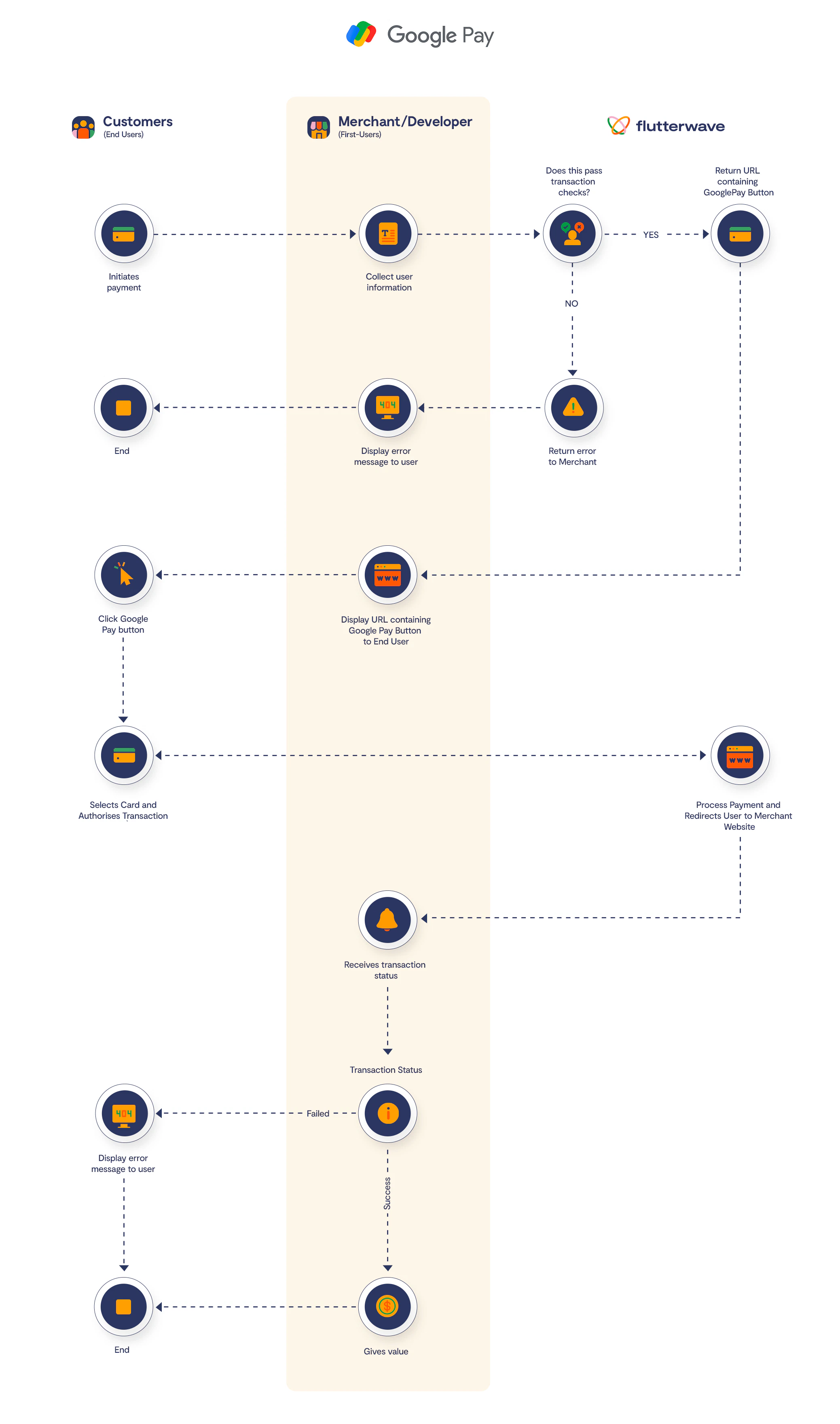
Step 1: Initiating the Payment
First, you’ll need the customer’semail. Combine that with the rest of the payment details to create the payload and send it to our charge endpoint. You’ll need to specify amount, currency, fullname and a unique tx_ref. You can also pass more details, like the fullname and custom meta information. See the endpoint reference for all parameters that can be passed.
cURL
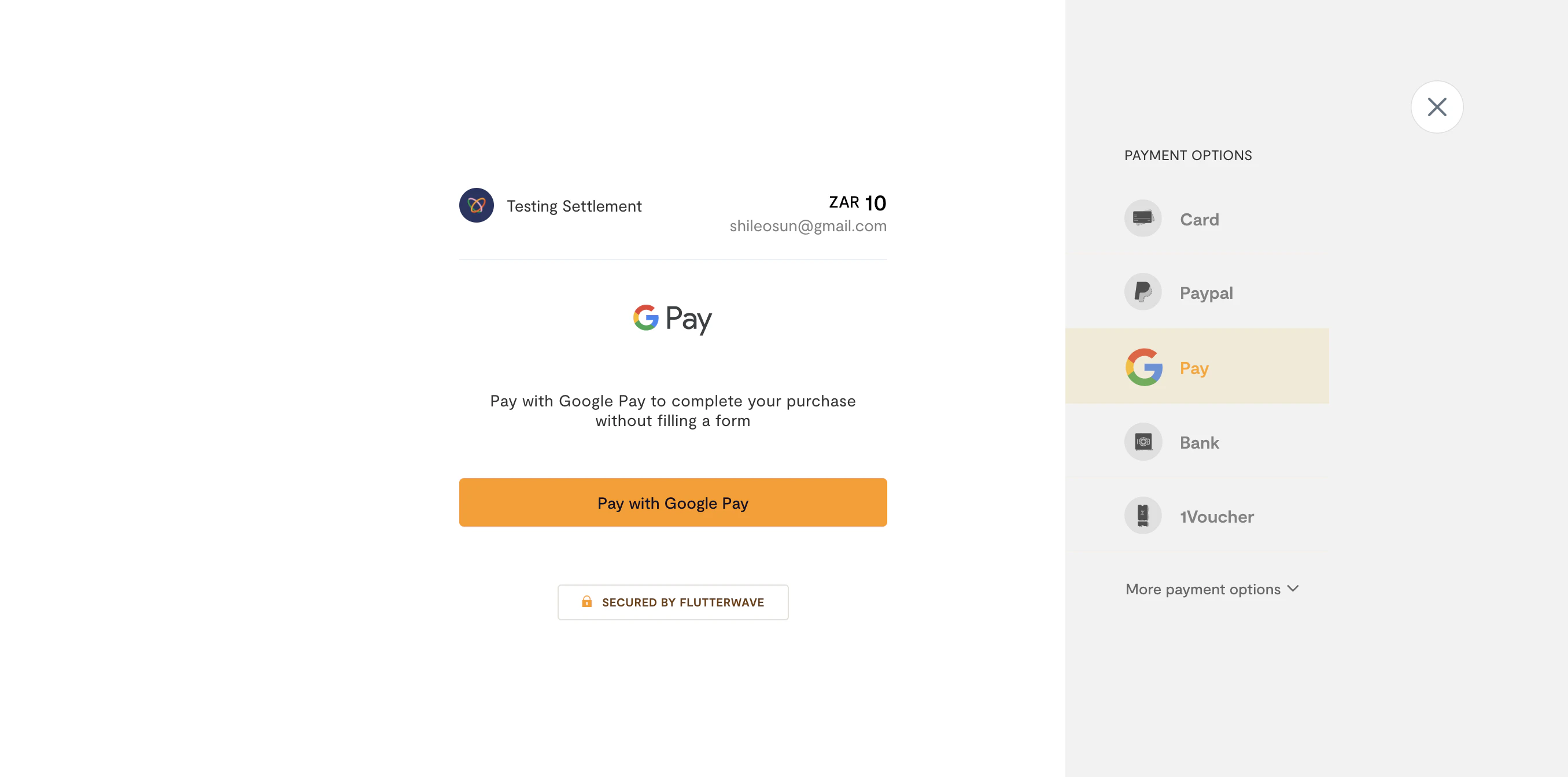
Step 2: Redirecting your Customers
After a successful charge, You’ll get a response that looks like this:
Sample Response
statusis"successful", which means the charge was initiated successfully.data.statusis"pending", meaning that the payment has been initiated but the payment has not yet authorized/approved by the User.meta.authorizationcontains the important details to complete the payment. Themeta.authorization.redirectfield has the redirect URL to complete the payment.
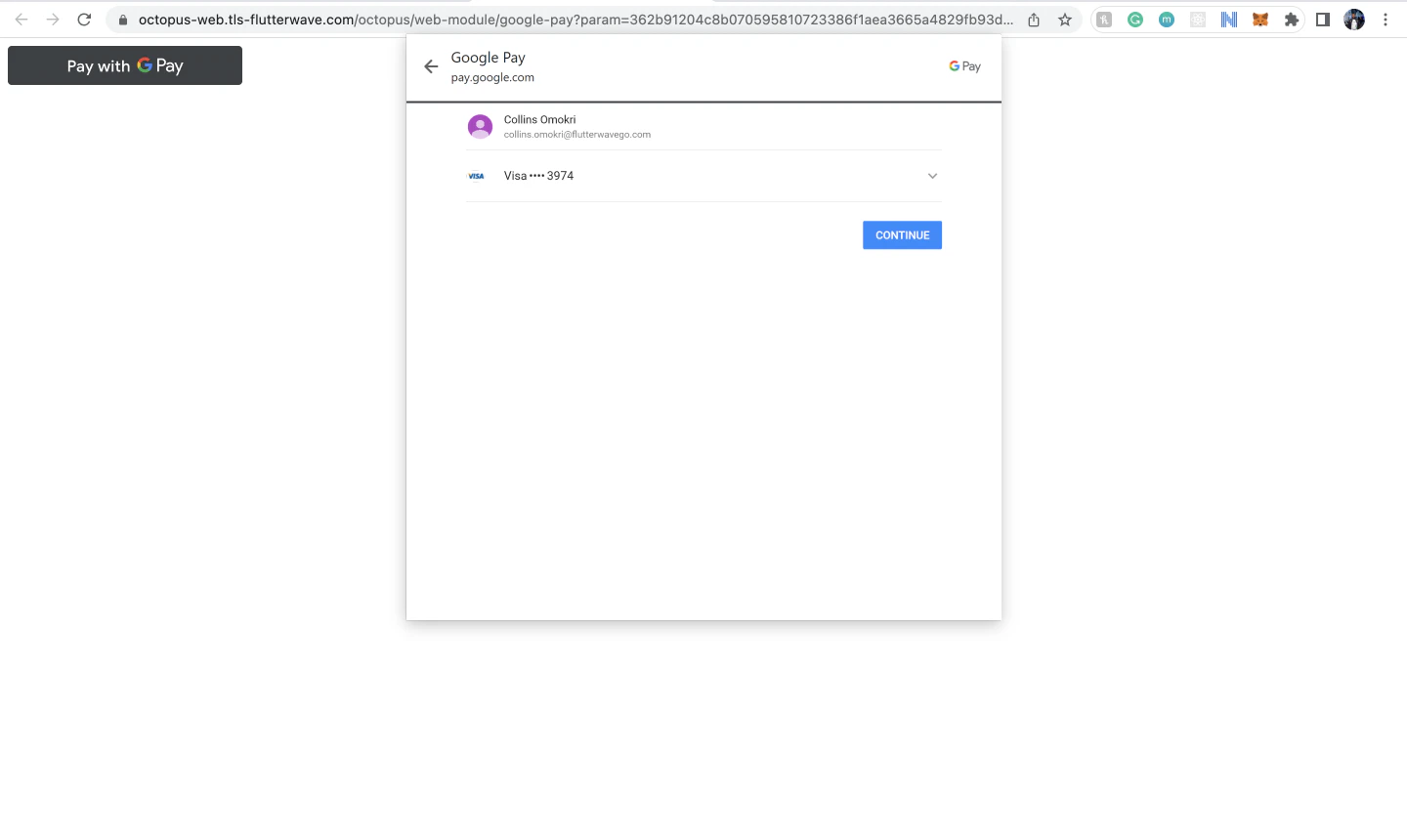
Step 3: Completing the payment
After completing the payment, we’ll send you a webhook response to your server. Here is an example webhook response:Sample Response
Testing Google Pay
You can find test credentials and mock data for your Integration tests in the testing helpers section.Next Steps
That’s it! You’ve successfully implemented Google Pay. You can also improve your app’s payment experience with- Google brand guide.
- Google Pay UX best practices.